Is It Legal to Buy Cream Chargers in the UK? The Full Law Guide
This is the question we get more than any other, usually phrased slightly nervously, and usually by someone who just wants to make a decent chantilly for a Sunday service. So let’s answer it plainly before getting into the detail: yes, it is legal to buy cream chargers in the UK for culinary use, provided you are 18 or over and you are buying them to use as a propellant in a whipped cream dispenser.
The reason the question comes up at all is that the law changed in November 2023, the headlines were about balloons at festivals, and a lot of catering buyers were left genuinely unsure whether the thing they had been ordering for years had quietly become contraband. It hasn’t. But the framework around it is now more specific about why you are buying, and that distinction is worth understanding properly rather than half-remembering from a news article.
The two laws that actually apply
There are two pieces of legislation in play, and they do different jobs.
1. The Psychoactive Substances Act 2016
This one targets supply rather than possession. Under the Act it is an offence to supply, or offer to supply, a psychoactive substance — including nitrous oxide — knowing or suspecting it would be consumed for its psychoactive effect.
Read that carefully, because the operative words are “knowing or suspecting.” The Act is not aimed at the gas itself. It is aimed at a seller’s state of mind about what the buyer intends to do with it. A supplier selling 640g cylinders to a dessert kitchen is in an entirely different position from one selling them outside a nightclub at 2am, even though the physical product is identical.
2. The Misuse of Drugs Act 1971, as amended on 8 November 2023
This is the change that generated the headlines. On 8 November 2023, nitrous oxide was reclassified as a Class C controlled drug under the Misuse of Drugs Act 1971.
The part that got far less coverage is that the amendment carries a built-in exemption for legitimate uses. Reclassification was not a ban. It was a reclassification with carve-outs, and catering sits inside one of those carve-outs.
The exemption that makes catering supply lawful
Nitrous oxide is an approved food additive — E942 — for use as a propellant gas in aerosol cream. That is not a loophole anyone found; it is the substance’s long-standing designated food use, and it is precisely why a whipped cream dispenser works the way it does.
Possession and supply remain lawful where the nitrous oxide is for a legitimate purpose. Those purposes fall into three categories:
- Medical and veterinary use
- Industrial and commercial use, as an approved food additive
- Food preparation — cream chargers used in whipped cream dispensers for catering, hospitality, or home baking
If you are a pastry chef, a bar running espumas, a coffee shop, a caterer, or someone making dessert at home, you are in the third category. That is the whole answer, and it has not changed.
What this means at the point of purchase
Our position is straightforward and we state it in the same terms everywhere on the site: 18+, lawful culinary use only. When you order, you confirm that you are aged 18 or over and that all products will be used solely for culinary use in accordance with UK law.
That confirmation is not decorative. Given that the Psychoactive Substances Act turns on what a supplier knows or suspects, a clear declaration of culinary intent is the mechanism by which a legitimate transaction stays legitimate on both sides of the counter. It protects you and it protects us, which is a rare enough alignment of interests that it’s worth pointing out.
The flip side is equally clear: buying chargers explicitly to inhale for a “high” is unlawful. There is no version of this article where that sentence gets softened.
Our full position, including the compliance detail behind it, lives on our legal & compliance page — that page is the authoritative statement and this article summarises it rather than replacing it.
What changed in November 2023 — and what didn’t
It’s worth separating these two things, because most of the anxiety we hear comes from collapsing them together.
What changed: nitrous oxide moved into Class C under the Misuse of Drugs Act 1971. That brought possession for non-exempt purposes into scope in a way it hadn’t been before, and it is the reason the subject was suddenly on the news.
What didn’t change: the food-additive status of E942, the legitimacy of food preparation as a purpose, or your ability to order chargers for a kitchen. The exemption for legitimate uses was written into the amendment itself rather than bolted on afterwards.
The practical effect for a catering buyer is close to zero, and the practical effect for a supplier is a sharper duty to pay attention to who is ordering and why. If your supplier has become more explicit about intent declarations since 2023, that is the system working as designed, not a sign that something has gone wrong with your order.
“Do I need to be a business to buy?”
No. Home baking appears in the same legitimate-use category as catering and hospitality. The qualifying factor is the purpose, not whether you hold a company number. What a trade account changes is pricing and paperwork, not permission.
“Does the quantity I order matter?”
Quantity is not itself the legal test — a busy dessert kitchen ordering a pallet is engaged in exactly the same lawful activity as someone buying one box. What matters is the purpose behind the purchase, which is why the declaration at checkout is framed the way it is rather than as a volume cap.
Does the format you buy change anything?
No. The legal position attaches to the substance and the purpose, not the packaging. An 8g steel charger and a 640g cylinder are the same food-grade N₂O doing the same job; the difference is throughput and cost per charge, not compliance status.
What the format does change is your economics, which is the decision most kitchens are actually trying to make:
- 8g chargers — Mosa 8g start at £6.99 a box. Right for low, irregular volume and for anyone whose dispenser only takes threaded chargers.
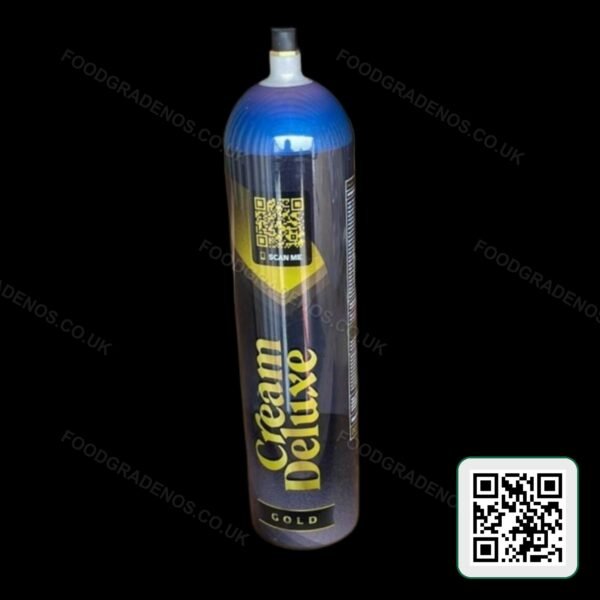
- 640–670g cylinders — FastGas 670g at £21.95 and Smartwhip Silver 640g at £44.99 sit at opposite ends of the same category. Both fit standard 0.5L and 1L professional dispensers.
- 2000g tanks — the Rotass 2000g tank at £49.99 is the format for a kitchen charging daily rather than occasionally.
All prices above are current at the time of writing and shown per single unit; case pricing reduces the per-unit figure.


Shop all cream chargers & whippers
If you’re buying as a business
Nothing in the law requires a catering business to hold a licence to buy food-grade nitrous oxide for kitchen use — the food-preparation purpose is the qualifying factor. In practice, though, buying through a trade account rather than ad hoc does two useful things at once: it puts your purchases on a consistent paper trail under your business name, and it gets you case pricing rather than single-unit pricing.
If you are ordering at volume, our bulk & trade pages cover how that works. If you have a question we haven’t answered here, the help centre is the fastest route to a real answer.
The short version
- Nitrous oxide is a Class C controlled drug under the Misuse of Drugs Act 1971 as amended on 8 November 2023.
- That amendment carries a built-in exemption for legitimate uses.
- Nitrous oxide is an approved food additive (E942) as a propellant in aerosol cream.
- Food preparation — cream chargers in whipped cream dispensers for catering, hospitality or home baking — is a legitimate use, and possession and supply remain lawful for it.
- Supplying it while knowing or suspecting it will be consumed for its psychoactive effect is an offence under the Psychoactive Substances Act 2016.
- You must be 18 or over, and buying for lawful culinary use only.
If your interest in a cylinder begins and ends with getting a stable, properly aerated cream onto a plate, the law has never been your problem. The confusion is a genuine cost of a policy change that was written about almost entirely in terms of its misuse, and if this article saves one chef a worried afternoon of Googling before placing a routine order, it has done its job.
This article is a plain-English summary of our published compliance position and is not legal advice. For anything specific to your business, take proper professional advice.