
How to Use a Cream Whipper: The Complete Beginner’s Guide
A cream whipper looks simple enough that most people skip the instructions entirely, which is exactly how you end up with a kitchen counter full of liquid cream and a slightly dented ego. The good news: there’s really only a handful of details that separate a smooth first attempt from a frustrating one, and none of them are complicated once someone actually points them out.
What you’ll need
- A cream whipper (0.5L for home use, 1L if you’re feeding more than a few people)
- Double or whipping cream — anything under 35% fat struggles to hold its shape under N2O
- Sugar or another sweetener, if you want it sweet
- Food-grade N2O cream chargers sized to your whipper
Start cold
Chill the cream, the canister, and the head for 20–30 minutes if you can spare the time. Warm cream whips into something looser and less stable no matter how carefully you handle every step after this one — it’s the single easiest thing to get right and the easiest to skip.
Fill it properly — this is where most people go wrong
Pour the cream (plus sugar or flavouring, fully dissolved) into the canister, staying under the maximum fill line printed inside. The gas needs somewhere to expand into. Overfilling is the single most common reason a whipper “won’t charge properly” or sputters out liquid instead of foam — it’s an easy mistake to make once, because more cream instinctively feels like it should mean more whipped cream.
Load the charger
Screw the charger holder onto the head with one N2O cream charger loaded inside. You’ll hear a brief hiss as the gas releases into the canister — normal, and it should last a second or two. Most 0.5L whippers need one 8g charger per fill; 1L canisters often want two.
Shake it, then test it
Shake firmly 4–6 times to work the gas through the cream. Hold the whipper nozzle-down, squeeze the lever all the way, and dispense. The very first squeeze is the real test: if it comes out thin, the gas hasn’t fully dissolved yet, and a few extra shakes almost always fixes it.
Ratios that actually hold
For sweetened whipped cream, start around 500ml of cream to 2–3 tablespoons of sugar and adjust from there to taste. Fat content matters more than brand loyalty here — cream at 35%+ holds its structure far better than anything lighter, which is usually the real reason a recipe that worked last week suddenly “stopped working” this week.
Troubleshooting
- Comes out runny or liquid: under-charged — shake again, or the cream wasn’t cold enough.
- Thin foam that collapses fast: usually too much gas for the fill size, or cream with a lower fat percentage than the recipe assumed.
- Sputtering, mostly gas: an overfilled canister with no headspace left to expand into.
- Metallic or off taste: a sign the charger wasn’t genuinely food-grade N2O — see our food-grade compliance guide if you want the full explanation of why that distinction is worth caring about, not just a label technicality.
Cleaning up
Rinse the head and canister in warm water after every use, and give the whole thing a proper wash with mild soap every few uses or between flavours, so nothing builds up in the dispensing valve. Long-term consistency comes down to maintenance as much as technique — worth a guide of its own, which we’ll cover separately.
Buying chargers
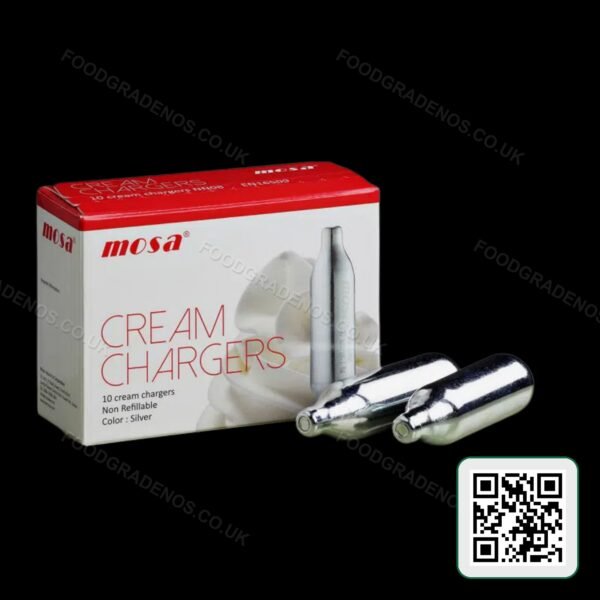
Whippers take standard 8g N2O chargers, sold as singles or in bulk boxes. If you’re going through cream regularly, buying in bulk is the obvious move — the per-unit cost drops noticeably at higher box counts. Cafés and restaurants ordering real volume should skip individual boxes and look at our trade pricing instead.
Shop 8g cream chargers
Or visit our help centre for troubleshooting specific to your model.