Food-Grade vs Industrial Nitrous Oxide: What’s the Difference?
Nitrous oxide is nitrous oxide, chemically speaking — N₂O is N₂O whether it came out of a hospital anaesthetic line, a car’s NOS bottle, or the cylinder that just went into your dispenser. So when a customer asks us why the grade matters, the honest first answer is: the molecule doesn’t change. What changes is everything around it — how pure it is, what’s allowed to be left in it, and who’s checking.
That distinction gets flattened in most consumer-facing explanations, and it’s worth actually unpacking, because it’s the difference between a gas that’s legally and practically fit to go into food and one that categorically isn’t.
The purity gap is the whole story
Food-grade nitrous oxide sold for culinary use is manufactured and certified to E942 — the EU/UK food additive designation for nitrous oxide used as a propellant gas in aerosol cream. E942 comes with a purity specification: it has to meet defined limits on moisture, oil residue, and trace contaminants before it can legally be labelled and sold for food use.
Industrial nitrous oxide has no such requirement, because it was never made with food contact in mind. It’s produced to whatever specification suits its actual job — often as a propellant, an oxidiser, or a component gas in industrial processes — and it can legitimately contain trace oils, moisture, or other residues that would be irrelevant for its intended use but are exactly what E942’s purity limits exist to keep out of something you’re about to whip into cream.
Every cylinder we stock is labelled food-grade for this reason — it’s not a marketing distinction layered on top of the same product, it’s a different manufacturing and QC standard from the start.
Why the distinction actually matters in a kitchen
Three things follow from the purity gap, and they’re all practical rather than theoretical:
1. Taste and texture
Trace oil or moisture contamination in a lower-purity gas can carry through into the cream — a faint metallic or oily note, or cream that doesn’t hold its structure as cleanly. It’s subtle enough that most people can’t name what’s wrong, only that a batch tastes slightly off. Food-grade purity is what keeps that variable out of the equation entirely.
2. Legal use
The exemption that makes nitrous oxide lawful to buy and use for food preparation — covered in full on our legal & compliance page — applies to nitrous oxide supplied and used for that purpose. Industrial-grade gas was never intended for consumption and isn’t sold, labelled, or certified as a food product. Using anything other than a food-grade, E942-certified charger in a whipped cream dispenser sits outside what the exemption was written for.
3. Traceability
A genuine food-grade cylinder carries batch and certification information back to a manufacturer who is set up to answer for food-contact quality. An industrial cylinder, even if the gas inside happens to be pure enough, carries none of that — there’s no food-safety paper trail behind it, which matters the moment anyone asks where your ingredients came from.
How to tell what you’re actually buying
In practice this is less about testing a gas yourself — nobody’s doing a purity assay on a Tuesday afternoon — and more about buying from a source that’s already done that work. A few checks that actually tell you something:
- The word “food-grade” or the E942 reference on the product listing — not just implied by the product being sold near cream whippers.
- A cylinder or charger clearly branded and sealed by a named manufacturer, rather than unbranded or generic packaging.
- A supplier who states 18+ culinary-use-only terms at checkout — this is a reasonable proxy for a business actually paying attention to the exemption it’s operating under, not just moving cylinders.
Every product we list is food-grade, E942-compliant, and sold for lawful culinary use only — this isn’t a tier of the catalogue, it’s the whole catalogue. If you want to see what that actually looks like on the shelf:
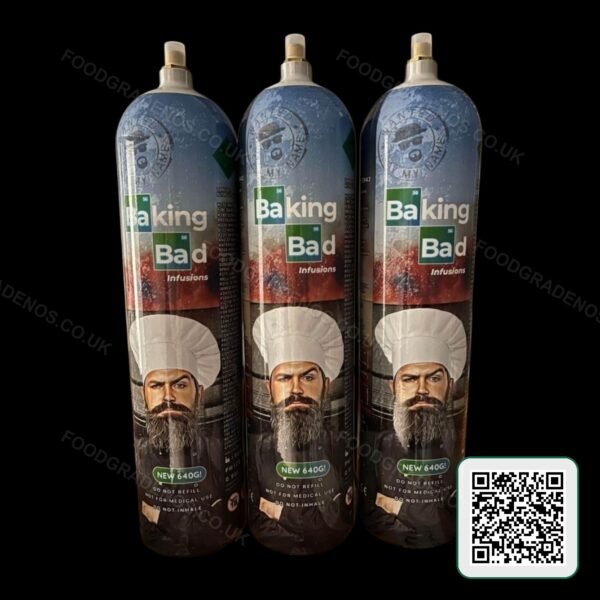
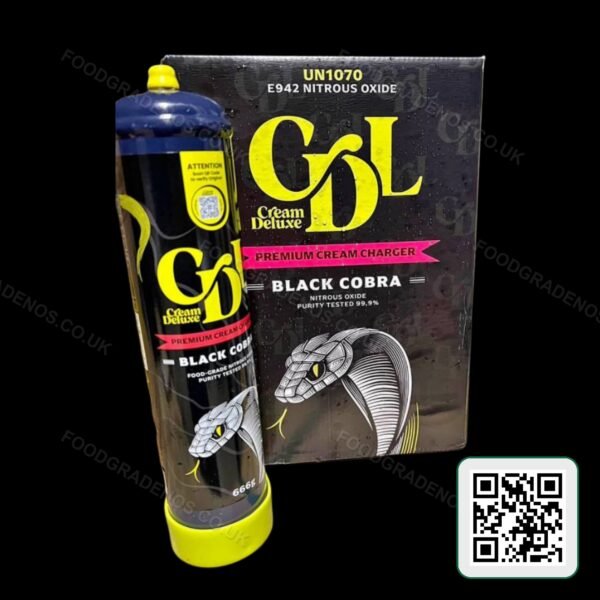
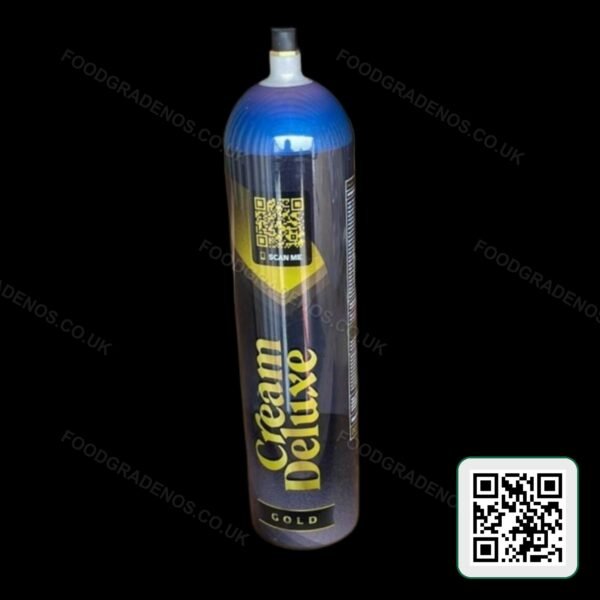
Shop all cream chargers & whippers
The one-line version
Food-grade and industrial nitrous oxide are the same molecule wearing two very different QC standards — one built for going into food, one that was never asked to. For anything touching a dispenser that’s about to touch a dessert, that gap is the whole answer, and it’s not one worth closing corners on to save a few pence a charge.
If you’re setting up buying for a kitchen and want the fuller legal picture behind why this matters, our legal & compliance page has the complete position.